Mediterranean Meal Prep: 7 Easy Lunches for the Week
A good lunch does not need to take a lot of time. With a few basic foods and some simple prep, you can have a full meal ready for each day of the week. The Mediterranean style makes this easier because it relies on simple foods such as vegetables, fruit, beans, whole grains, nuts, olive oil, fish, dairy, and lean meat.
The Mediterranean diet is more than a short-term diet plan. It is a broad way of eating that puts plant foods at the center of each meal. Fruits, vegetables, legumes, whole grains, nuts, and olive oil have a major role. Fish and dairy can have a moderate role, while red meat, processed meat, sweets, and highly processed foods have a smaller role.
This style also works well for meal prep. Many of its foods stay fresh for several days, and you can use the same basic items in different meals. Recent 2026 meal ideas also place more focus on a mix of protein, fiber-rich plants, complex carbohydrates, and healthy fats.
Why Choose Mediterranean Lunches?
A lunch should give you enough food to feel satisfied without making the afternoon feel too heavy. A Mediterranean meal can do this through a mix of protein, fiber, whole grains, vegetables, and healthy fats.
For example, chickpeas can add protein and fiber, while quinoa or bulgur can provide whole grains. Olive oil adds healthy fat, and vegetables add volume, color, vitamins, and minerals. Fish such as salmon can also provide omega-3 fats.
Current research continues to support the Mediterranean pattern. A 2026 systematic review and meta-analysis assessed 54 cohort studies with more than 1.8 million participants. Higher adherence to the Mediterranean diet was linked with a lower risk of death from all causes. The researchers reported a pooled relative risk of 0.96 for each one-point rise in the Mediterranean diet score. The overall certainty of the evidence was rated as moderate.
Since these were cohort studies, the results show an association rather than proof that the diet itself caused the lower risk. This distinction matters because long-term health depends on many factors, including physical activity, sleep, genetics, medical care, and other lifestyle habits.
A 2026 review also found consistent evidence for links between the Mediterranean diet and better cardiovascular and metabolic outcomes. The review covered areas such as heart disease, type 2 diabetes, liver disease, kidney disease, some cancers, and brain health. It also noted limits in the way diet adherence is measured across studies.
How to Prep for the Week
You do not need seven completely separate recipes. That can take too much time and make meal prep feel like a chore. A better method is to cook a few basic foods and use them in different ways.
Start with one or two whole grains, such as quinoa or bulgur. Cook a batch of chickpeas or lentils, or use plain canned beans after a good rinse. Roast a tray of vegetables such as zucchini, peppers, onions, and tomatoes. You can also cook chicken or salmon for meals that need an extra source of protein.
Keep fresh items such as cucumber, parsley, spinach, and lemon in the fridge. Olive oil, lemon juice, garlic, tahini, and herbs can form the base of quick dressings.
This approach gives you several parts that you can mix across the week. It also helps reduce food waste because the same ingredients can serve more than one purpose.
Recent Mediterranean meal-prep recipes use this same idea. Simple foods such as salmon, chickpeas, quinoa, tuna, tomatoes, artichokes, olives, lentils, bulgur, and fresh herbs can form several easy lunches.
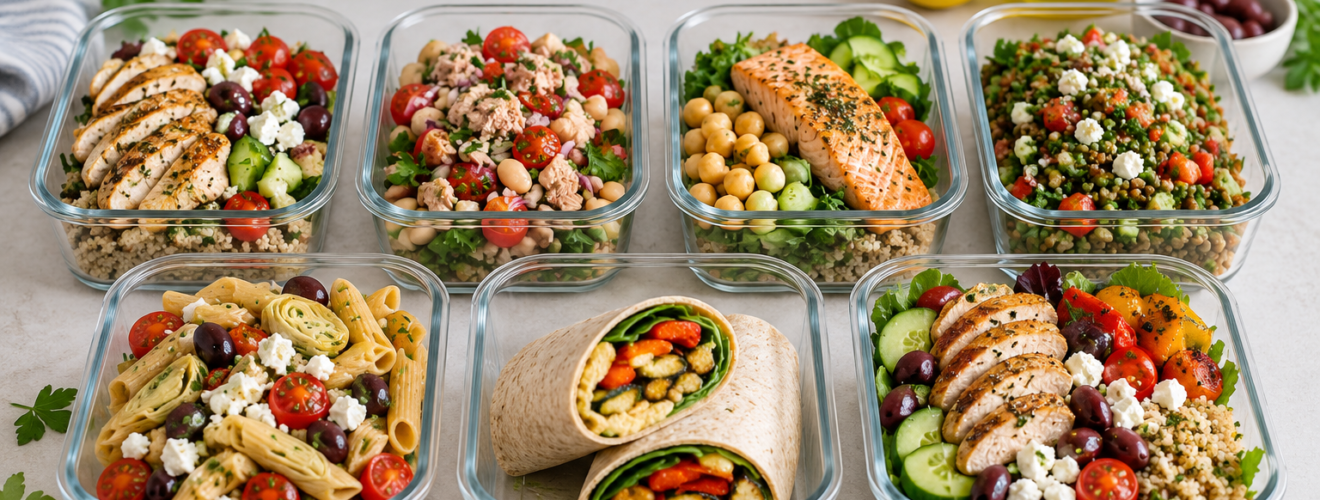
Monday: Greek Chicken and Quinoa Bowl
Start the week with a simple Greek-style bowl. Use cooked chicken, quinoa, cucumber, tomatoes, chickpeas, feta, olives, and a little olive oil with lemon juice.
The quinoa gives the bowl a firm whole-grain base, while chicken and chickpeas add protein. Cucumber and tomato give it a fresh taste, and feta plus olives add a salty note.
You can prepare the chicken and quinoa in advance. Store the fresh vegetables apart if you want them to stay crisp. Add the dressing just before you eat.
This meal also gives you an easy way to change the flavor. Add oregano, parsley, mint, or a little garlic to the lemon and olive oil dressing.
Tuesday: Mediterranean Tuna and White Bean Salad
For Tuesday, use tuna and white beans for a fast lunch. Add chopped tomatoes, cucumber, red onion, parsley, and leafy greens. A simple dressing of olive oil, lemon juice, black pepper, and herbs can bring everything together.
White beans give the salad more substance than vegetables alone. Tuna adds protein and can make the meal feel more complete.
You can also place the salad beside a slice of whole-grain bread. This adds another source of whole grains and makes the meal more suitable for a busy workday.
A Mediterranean-style tuna and white bean salad fits the current focus on seafood, beans, vegetables, and healthy fats. Similar lunch ideas remain common in recent Mediterranean meal plans.
Wednesday: Salmon, Chickpea and Grain Bowl
Midweek is a good time for salmon. Use cooked salmon with chickpeas, quinoa or bulgur, cucumber, leafy greens, and lemon.
Salmon can provide omega-3 fats, while chickpeas give fiber and plant protein. The grain adds carbohydrates that can help make the meal more filling.
Keep the salmon chilled and use it within a safe storage period. For the best texture, add fresh vegetables close to meal time.
A lemon and olive oil sauce works well here. You can also add plain Greek yogurt, garlic, and herbs for a creamy sauce without the need for a heavy dressing.
Salmon bowls have also appeared in recent Mediterranean lunch collections, with vegetables and grains used to create a balanced make-ahead meal.
Thursday: Lentil Tabbouleh Bowl
Lentils make a great base for a meat-free lunch. Mix cooked lentils with bulgur, parsley, cucumber, tomato, lemon juice, olive oil, and a little garlic.
Traditional tabbouleh often places herbs at the center, while this meal uses lentils to add more substance. The result is fresh, bright, and easy to store.
You can add feta if you want a richer taste. A small portion of hummus on the side can also work well.
This is one of the easiest meals to adapt. If you do not have bulgur, quinoa can work in its place. If parsley is not available, you can use a mix of parsley and mint.
Friday: Mediterranean Pasta Salad
Pasta salad can be a useful Friday lunch because it is easy to prepare ahead. Use whole-grain pasta with tuna or chickpeas, cherry tomatoes, artichokes, olives, cucumber, and herbs.
A dressing made from olive oil, lemon juice, garlic, and black pepper keeps the flavor simple. You can add feta for more protein and taste.
Whole-grain pasta can help make the meal more substantial, while vegetables and beans can raise the fiber content.
Recent Mediterranean meal-prep ideas also include pasta salad with whole-grain pasta, tuna, tomatoes, artichokes, olives, lemon, and olive oil. It can hold well in the fridge and works well as a packed lunch.
Saturday: Hummus and Roasted Vegetable Wrap
For Saturday, make a simple wrap with hummus, roasted vegetables, spinach, cucumber, and chickpeas. Use a whole-grain wrap if you prefer more whole grains.
Roasted peppers, zucchini, onions, and eggplant work especially well. You can roast a large tray early in the week and use the vegetables in several meals.
Hummus gives the wrap a creamy texture without the need for a rich sauce. Chickpeas add more protein and fiber, while spinach and fresh vegetables add color and crunch.
If you want more protein, add grilled chicken, tuna, or a little feta. The basic wrap can stay vegetarian without losing its place within the Mediterranean pattern.
Sunday: Greek Chicken Salad Box
Finish the week with a Greek chicken salad box. Add cooked chicken, leafy greens, cucumber, tomato, olives, roasted vegetables, feta, and a small portion of quinoa or another whole grain.
This meal is easy to adjust based on what remains in your fridge. Leftover roasted vegetables can go into the box instead of fresh vegetables. Extra quinoa from Monday can also serve as the grain.
Use lemon, olive oil, oregano, and black pepper for the dressing. Keep the dressing in a small separate container if you want the greens to stay crisp.
How to Keep Your Meals Fresh
Good storage can make or break meal prep. Cooked foods should go into clean containers and stay chilled. Keep sauces separate when possible, especially with salads and fresh vegetables.
Some foods also have different storage needs. Cooked grains, beans, chicken, fish, and cut vegetables should not sit at room temperature for long periods. When you prepare several meals at once, divide them into separate containers soon after the food cools enough for safe storage.
Fresh greens, cucumber, and herbs often taste better when you add them close to meal time. Roasted vegetables, grains, beans, and cooked chicken can form the more stable base of your meals.
Make Protein and Fiber a Priority
One useful update to Mediterranean meal prep is a stronger focus on protein and fiber. The goal is not to turn the Mediterranean diet into a high-protein diet. Rather, each lunch should have a clear source of protein so the meal feels complete.
Chicken, salmon, tuna, lentils, chickpeas, white beans, Greek yogurt, and hummus can all help. Whole grains, beans, vegetables, nuts, and seeds can add fiber.
Recent 2026 meal plans and recipe collections place clear attention on protein-rich Mediterranean lunches, with some recipes providing at least 15 grams of protein per serving.
Your exact needs will depend on your age, body size, activity level, health needs, and total daily food intake. A single lunch does not need to meet a fixed protein target for everyone.
The Mediterranean Diet Is Not About Perfection
It is easy to look at a meal plan and feel that every meal must look perfect. That is not the idea behind the Mediterranean pattern.
You do not need every traditional Mediterranean food in your kitchen. You also do not need to avoid every food outside the pattern. The basic idea is to make vegetables, fruits, beans, whole grains, nuts, olive oil, and other minimally processed foods a regular part of your meals.
Red meat, sweets, and processed foods can have a smaller place. Fish, dairy, eggs, and poultry can have a moderate place. This flexible approach is one reason the Mediterranean pattern can work well for everyday meals.
A Simple Week of Better Lunches
Seven lunches do not need seven long recipes. With quinoa or bulgur, chickpeas, lentils, chicken, salmon, tuna, vegetables, herbs, olive oil, lemon, and a few simple extras, you can create a full week of varied meals.
The biggest benefit of this approach is ease. You cook a few basic foods once, then use them in different combinations. One batch of roasted vegetables can become part of a bowl, salad, wrap, or pasta dish. One pot of quinoa can serve several meals. Beans can add substance to salads without much extra work.
The latest evidence continues to support the Mediterranean pattern as a practical dietary model with links to better long-term health outcomes. At the same time, research does not suggest that one food or one lunch can create these results by itself. The overall pattern matters most.
For a busy week, that makes Mediterranean meal prep a simple choice. Prepare a few basic foods, keep the flavors fresh, and build each lunch around vegetables, a whole grain, a source of protein, and healthy fats.
Also Read – 10 High-Protein Breakfasts That Keep You Full Longer