Best European City Breaks for a 3-Day Trip in 2026
A three-day European city break needs a different kind of planning from a longer vacation. There is little room for long transfers, complicated day trips, or a schedule that leaves half the day empty. The strongest choices put major sights, good food, local culture, and easy transport within a manageable area.
Europe also looks different in 2026. Travel demand remains strong, while September and October have become attractive months for city trips. Cooler weather, lighter crowds, and better hotel value can make a short visit much easier. Current travel coverage also points to Vienna, Paris, Budapest, Prague, Lisbon, Rome, and other major cities as strong choices for a three-day escape.
Paris: The Classic Three-Day City Break
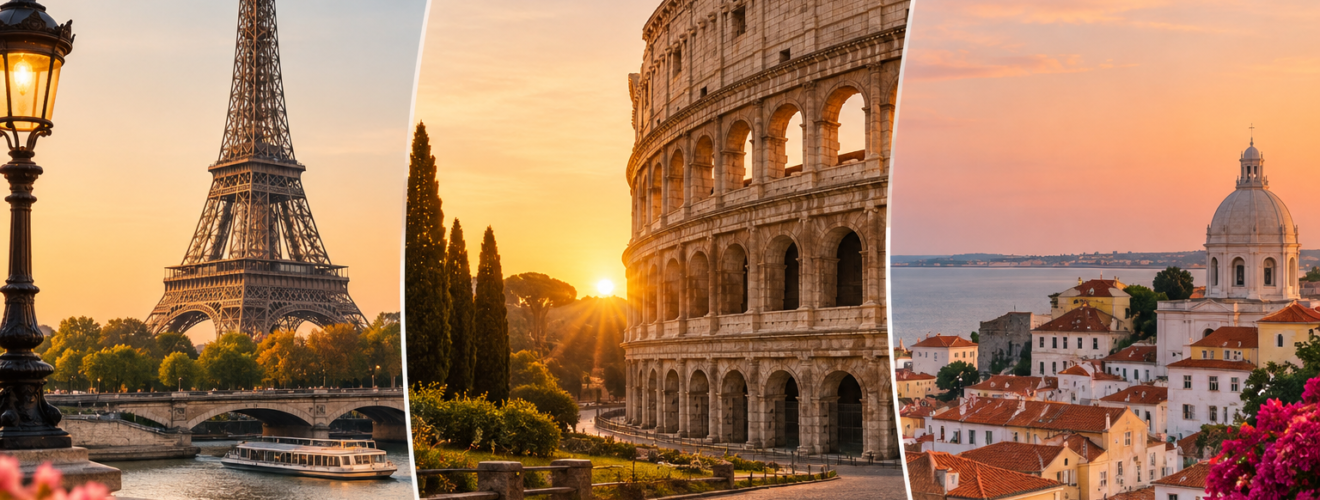
Paris remains one of the easiest European cities to fill with three full days. The city has major museums, famous neighborhoods, historic streets, landmarks, restaurants, gardens, and river views within a relatively compact area. A short trip can cover the Eiffel Tower, Louvre, Notre-Dame area, Montmartre, Musée d’Orsay, Saint-Germain, and the Seine without the need for a separate excursion.
Fall 2026 adds another reason to visit. Paris has a strong cultural calendar, with major exhibitions such as “Cézanne and Us” at the Grand Palais, Mary Cassatt at the Musée d’Orsay, Monet at the Musée de l’Orangerie, Warhol at the Musée du Luxembourg, and Tintoretto at Jacquemart-André. Paris also has Art Basel Paris in October. Current fall travel coverage highlights shorter museum lines and comfortable temperatures in the mid-50s to low 60s Fahrenheit.
Late September and October offer a particularly useful balance for a three-day visit. Summer heat has eased, while the city still has plenty of outdoor life. Paris also has a tourist tax that varies by accommodation class, so the final hotel price deserves a close look before booking. Current 2026 figures range from €2.60 to €15.60 per person per night before certain local additions.
Rome: Ancient History, Great Food, and a Full Schedule
Rome works well for a short trip thanks to its huge collection of famous sights. The Colosseum, Roman Forum, Pantheon, Trevi Fountain, Piazza Navona, Vatican Museums, and Trastevere can fill three days without the need for a long trip outside the city.
The main challenge comes from the number of visitors. Popular attractions can take a large part of the day without advance reservations, so a simple schedule can save valuable time. October offers a useful combination of pleasant sightseeing weather and a strong cultural atmosphere. Current travel guidance lists October among the best months for Rome, while September also offers better conditions than the peak summer period.
Rome also keeps accommodation costs relatively manageable compared with some major Western European capitals, although hotel category makes a major difference. The 2026 tourist tax ranges from about €3 at campsites to €10 at five-star hotels, with charges applied for a maximum of 10 consecutive nights.
Vienna: A Major 2026 Cultural Year
Vienna has an unusually strong case for a 2026 city break. The Austrian capital combines imperial architecture, museums, classical music, coffeehouses, parks, restaurants, and elegant neighborhoods in a city that remains easy to explore over three days.
The 2026 calendar adds several major anniversaries. Mozart reaches his 270th anniversary, the Albertina Collection and Burgtheater mark 250 years, MuseumsQuartier celebrates its 25th anniversary, and Vienna Pride reaches its 30th year. Vienna also hosts Eurovision in 2026.
Fall brings another advantage. Current travel experts highlight Vienna as a strong September and October destination, with cooler temperatures, a rich cultural calendar, vineyards near the city, historic cafés, and a growing restaurant scene.
Accommodation tax also changed in 2026. Vienna now charges 5% of the room rate, up from 3.2%, with another increase scheduled for July 2027.
Lisbon: A Relaxed Three-Day Escape
Lisbon suits a short trip that needs a slower pace. Alfama, Belém, Baixa, Chiado, and several famous viewpoints provide plenty of places to explore without a packed museum schedule. The city also brings strong food, seafood, cafés, nightlife, and traditional fado.
September and October are especially useful for Lisbon. Current shoulder-season travel coverage notes warm weather, active local culture, and a more comfortable atmosphere than the busiest summer period.
Lisbon also remains relatively straightforward for budget planning. The city charges a €4 tourist tax per person per night, capped at seven nights, and the rate remains at €4 through 2026.
A three-day Lisbon trip can focus entirely on the city, although Sintra remains an option for travelers who want to replace part of the urban schedule with a nearby historic destination.
Prague: Architecture and Value in One Compact City
Prague remains one of Europe’s strongest choices for a short city break. The historic center packs the Old Town Square, Charles Bridge, Prague Castle, astronomical clock, riverside areas, and historic streets into a relatively small area.
That compact layout matters on a three-day trip. Less time goes toward transport, which leaves more time for cafés, restaurants, museums, and evening walks.
September and October also bring comfortable sightseeing conditions. Current travel coverage highlights Prague’s Dvořák Music Festival and Signal Festival, while fall weather suits long walks through the historic center.
Prague also keeps its tourist tax low compared with several Western European cities. The 2026 rate sits around CZK 50, or roughly €2, per person per night.
Budapest: Thermal Baths, Food, and Nightlife
Budapest offers a different type of three-day experience. The city combines grand architecture, the Danube, thermal baths, Hungarian food, historic cafés, and a famous nightlife scene.
September and October can work especially well. Current travel coverage highlights the Budapest Wine Festival in September, followed by Oktoberfest and Art Market Budapest in October. The cooler weather also makes time at the Széchenyi Baths more appealing.
Budapest also remains relatively attractive from a cost perspective. The tourist tax sits at 4% of the net room rate, with under-18s exempt.
Three days allow enough time for both sides of the Danube, a thermal bath visit, major landmarks, and several food or nightlife stops without an overloaded schedule.
Amsterdam: Museums, Canals, and a Busy Cultural Calendar
Amsterdam offers an easy short-trip format thanks to its canals, museums, compact center, and strong public transport. The Rijksmuseum, Anne Frank House, Jordaan, canal belt, and nearby neighborhoods can form a complete three-day itinerary.
The main concern in 2026 is cost. Amsterdam charges a tourist tax equal to 12.5% of the accommodation price, excluding VAT. That percentage can add a noticeable amount to a hotel bill.
The city also has a packed cultural calendar. WorldPride Amsterdam took place from July 25 through August 8, 2026, while the wider year includes concerts, exhibitions, and cultural events.
For a three-day trip, Amsterdam makes the most sense when museums, architecture, canals, and nightlife all matter more than a low daily budget.
Porto: A Smaller and Slower Alternative
Porto offers a gentler city-break experience than Lisbon. The historic Ribeira district, Dom Luís I Bridge, São Bento Station, Port wine cellars, churches, viewpoints, and riverside restaurants create enough variety for three days without a rushed schedule.
The smaller scale works particularly well for a short vacation. A day can focus on the old center, another on the river and wine cellars, and the final day on food, viewpoints, and quieter neighborhoods.
Porto also benefits from Portugal’s relatively straightforward city-tax structure, although accommodation prices can still change sharply across weekends and major event dates.
Barcelona: Architecture, Food, and the Mediterranean
Barcelona offers more variety than many three-day destinations. Gaudí architecture, the Gothic Quarter, El Born, Eixample, Park Güell, Sagrada Família, and Barceloneta can create a full schedule with very different experiences across each day.
The city also requires closer attention to extra costs in 2026. Barcelona increased its city surcharge to €5 from April 1, on top of the regional Catalan tax. Hotel rates can therefore look lower at first glance than the final bill.
Barcelona suits travelers who want architecture and food during the day, then beaches, bars, and restaurants at night. The combination makes the city particularly useful for a short trip that needs several different experiences in one place.
Florence: Maximum Art in Minimum Distance
Florence works especially well for travelers who want art and history rather than a large-city atmosphere. The Duomo, Uffizi Gallery, Accademia, Ponte Vecchio, Palazzo Vecchio, and Oltrarno can all fit into a three-day plan.
The compact historic center gives Florence one of its biggest short-trip advantages. Major sights sit close together, so walking can replace a large part of the daily transport.
The main issue comes from demand at the most famous museums. Advance reservations can make a major difference during busy periods. Florence also charges a tourist tax based on accommodation category, with 2026 rates reaching €10 per adult per night at five-star hotels.
Seville: Warm Weather and Spanish Culture
Seville stands out for travelers who want a warmer European city break during the fall. The historic center offers the Alcázar, Seville Cathedral, Plaza de España, tapas bars, flamenco venues, and attractive streets that suit long walks.
September and October are particularly useful for a short visit. Current shoulder-season coverage highlights Seville’s harvest period and the warmer southern Spanish climate.
The city also has a strong local identity, which makes the trip feel distinct from the larger European capitals. Three days provide enough time for the main monuments without requiring a packed schedule.
Why September and October Matter in 2026
Fall has become one of the strongest periods for European city breaks. Current travel experts point to cooler temperatures, fewer crowds, and better conditions for long days outside. September and October also retain plenty of sunshine across southern Europe.
That shift matters more for a three-day trip than for a longer vacation. A two-hour queue, an overheated afternoon, or a long airport delay takes up a much larger share of a short break.
New Border Rules Matter in 2026
Travel from outside the European Union also has a new border process to consider. The European Union says its Entry/Exit System became fully operational across all Schengen countries on April 10, 2026. The system applies to non-EU nationals on short stays and collects biometric data at external Schengen borders. ETIAS has a planned start in the final quarter of 2026, with the exact date still pending official confirmation.
For a three-day trip, airport timing deserves extra attention. A short vacation leaves little room for unexpected border delays, so extra time at the airport can protect the first and last days of the trip.
Tourist Taxes Can Change the Final Budget
European cities continue to adjust visitor taxes in 2026. Amsterdam charges 12.5% of the room rate, Vienna charges 5%, Budapest charges 4% of the net room rate, Lisbon charges €4 per person per night, and Prague charges about €2. Barcelona also raised its city surcharge in April.
These charges rarely decide a destination on their own, but they can change the real cost of a hotel-heavy three-day trip. A comparison based only on the advertised room rate can therefore miss a meaningful part of the final bill.
The Best Fit Depends on the Type of Trip
Paris and Rome suit travelers who want famous landmarks, major museums, and a classic European experience. Vienna stands out for a culture-focused 2026 visit, with an unusually full anniversary and event calendar. Lisbon and Porto suit a slower trip with food, neighborhoods, and atmosphere at the center.
Prague and Budapest offer strong combinations of sightseeing and value, while Amsterdam works well for museums, canals, and nightlife despite higher accommodation taxes. Barcelona offers the widest mix of architecture, food, and Mediterranean atmosphere, while Florence delivers an unusually dense concentration of art and historic sights. Seville makes a strong choice for warmer fall weather.
For a three-day European break in 2026, the strongest destinations share one basic trait: the city itself provides enough to fill the entire trip. That quality matters more than a long list of nearby attractions. A compact historic center, reliable transport, strong food, major cultural sights, and a good fall calendar can turn 72 hours into a complete European vacation rather than a rushed stop between flights.
Also Read – Air Fryer Dinner Ideas for Busy Weeknights: 10 Easy Picks