EV Charging at Home: Costs, Setup and Common Mistakes
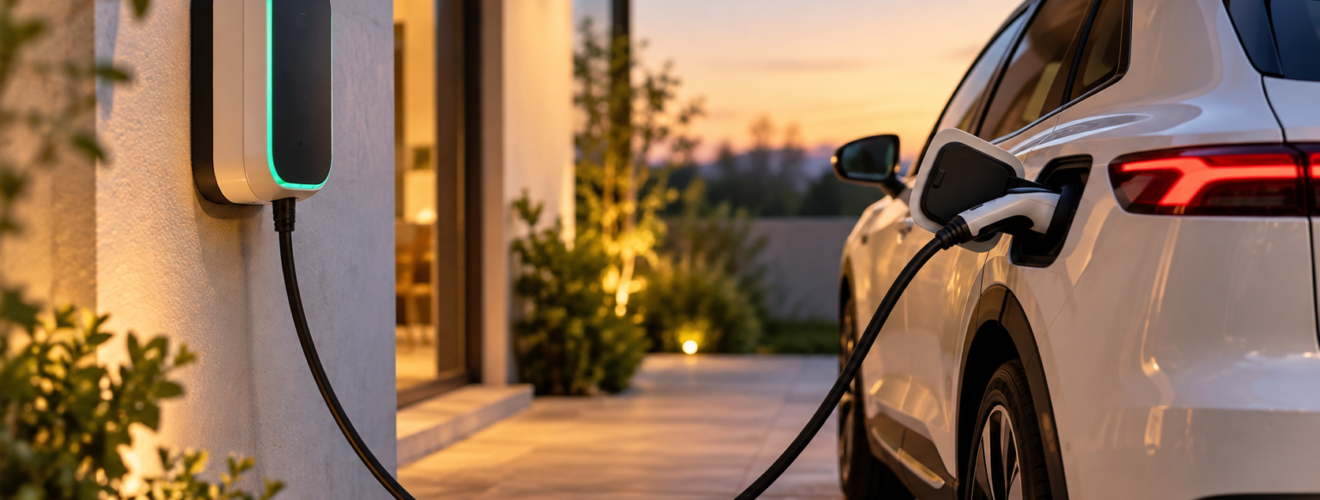
For most electric car owners, home power is the easiest and cheapest way to keep an EV ready for daily use. A car can stay at home for several hours at night, so there is often no need for a fast public charger every day. A home charger can add enough range while the car sits in the driveway or garage.
The basic idea is simple. The car takes power from the home electricity supply through a suitable charger. The cost then depends on the amount of power the car uses and the local electricity rate. Yet a safe home setup needs more than a wall box and a cable. The home supply, wires, breaker, earthing, parking spot and car charger limit all matter.
Current guidance from the US Department of Energy says most EV drivers use home AC power, with Level 1 or Level 2 equipment. India also permits EV owners to use an existing home electricity connection for an EV.
How Home EV Power Works
There are two main home options. A basic Level 1 setup can use a normal household outlet if the circuit is suitable. A Level 2 setup uses a higher-power circuit and can give much more range in the same time.
In the US, a Level 2 unit normally uses a 240-volt supply. The US Department of Energy says a Level 2 unit can cost about $500 to $4,000 before installation and any incentive. The final price can rise if the home needs extra electrical work or a service upgrade.
In India, a 3.3 kW unit may suit a smaller EV or a driver with low daily use. A 7.2 to 7.4 kW wall box is a common choice for a larger electric car. An 11 kW unit can suit a home with the right three-phase supply and a car that can accept that rate.
The key point is that the wall box does not decide the full charge rate by itself. The car also has an onboard AC charger with its own limit. If the car can accept only 7.4 kW, an 11 kW or 22 kW wall box will not make that car take power at a higher rate.
What Does a Home Setup Cost?
The price can vary a lot from one home to another. A simple setup with a short cable path may cost much less than one that needs new wiring, extra protection or a higher sanctioned load.
For India, current 2026 market estimates put a basic 7.2 kW wall box at about ₹35,000 to ₹45,000. A smart version with app control may cost about ₹45,000 to ₹65,000. An 11 kW three-phase wall box may cost about ₹55,000 to ₹85,000. These figures are market estimates and can differ by brand, city and installation needs.
A broader estimate for a straightforward 7.4 kW home setup is about ₹35,000 to ₹75,000. More complex work can push the total toward ₹40,000 to ₹1.2 lakh. The extra cost may come from a long cable route, electrical changes, earthing work, load upgrades or other site needs.
For a US home, the Department of Energy lists Level 2 hardware at about $500 to $4,000 before installation and incentives. A home with enough electrical capacity can have a lower final installation cost. A home that needs a service upgrade can face a much larger bill.
This is why two homes can receive very different quotes for the same charger model.
The Cost of Electricity
The electricity bill is usually easier to work out.
The simple formula is:
Power used in kWh × electricity price per kWh = charging cost
For example, suppose an EV uses 18 kWh for 100 km and the home electricity rate is ₹8 per kWh. The basic cost would be ₹144 for 100 km.
The real figure can be a little higher because some power is lost during the charge. The exact result also depends on the car, battery temperature, charger and home supply.
The US Department of Energy gives the same basic method. It notes that home electricity cost can vary by time of day and by utility plan. Some utilities have time-of-use rates, which can make late-night EV power cheaper.
India’s national EV guidance also allows owners to use an existing home electricity connection for an EV. State electricity rules and tariffs can still vary, so the local utility rate matters.
NITI Aayog’s e-AMRIT portal also notes that most private EV owners can rely on home power, since cars often stay at home overnight.
Do You Need a 7.4 kW Charger?
Not every EV owner needs one.
A driver with a short daily trip may get enough range from a lower-power setup. If the car stays at home for eight to ten hours each night, even a slower unit can add a useful amount of range.
A 7.4 kW wall box makes more sense for a driver with a longer daily trip, a larger battery or less time at home. It can add much more range during the same overnight period.
The best size comes from three things: the car’s AC power limit, the daily distance and the time the car stays at home.
A larger unit also needs a suitable electrical supply. A home with a small sanctioned load may not have enough spare capacity for a high-power wall box plus air conditioning, an oven, a water heater and other large loads at the same time.
Check the Home Before You Buy
One of the most common mistakes is to buy the charger first and ask about the electrical supply later.
The better order is simple. First check the car’s AC power limit. Then check the parking spot and the cable route. After that, ask a qualified electrician to assess the home supply.
The electrician can check the main panel, cable size, breaker, earthing and available capacity. If the home does not have enough capacity, an electrical upgrade may be needed.
The US Department of Energy also advises owners to check home electrical capacity with an electrician and utility before a Level 2 installation. Local rules may require a permit or an approved installation plan.
Do Not Use a Cheap Extension Board
An EV can draw a high amount of power for many hours. A low-quality extension board or loose plug may not suit that type of long, heavy load.
The same concern applies to old sockets, damaged cables and poor connections. Heat at a weak connection can become a serious safety issue.
A proper home setup should use suitable wires, protection and a dedicated circuit where required. The goal is not just to make the car take power. The whole electrical path must be safe.
Do Not Assume a 15A Socket Is Enough
A 15A socket has a current rating, but that does not prove that the full home circuit is ready for long EV use.
The electrician must check the wire size, breaker, socket quality, earthing and other loads on that circuit. The age and condition of the electrical system also matter.
A socket that works well for a short appliance use may not be the right choice for several hours of high electrical load every night.
Avoid a Shared Heavy-Load Circuit
An EV charger should not simply share a weak circuit with another large appliance.
For example, an EV plus an air conditioner or water heater can place a high load on the same home supply. A suitable dedicated circuit can reduce this risk.
For Level 2 equipment, the US Department of Energy notes that the home needs adequate electrical capacity and a suitable installation.
Earthing and Protection Matter
A safe EV setup needs suitable electrical protection. The exact equipment can vary by charger, local rules and electrical design, but the system should have the correct breaker and earth protection.
Current Indian guidance includes safety requirements for EV charging systems. The Bureau of Energy Efficiency notes that the Central Electricity Authority added extra EV charger safety requirements in 2023.
A 2026 installation should therefore follow current local electrical rules rather than rely on an old home setup or advice from an unqualified person.
The Hidden Cost: Cable Length
The wall box price can look attractive until the installer checks the cable route.
A parking space far from the electrical panel may need a long copper cable, conduit, wall work and extra labour. Outdoor parking can also need equipment that suits the weather.
For example, one 2026 India market estimate lists a 6 sq mm copper armoured cable at about ₹180 to ₹260 per metre. A 15-metre route could cost about ₹2,700 to ₹3,900 for the cable alone. That same estimate lists a 32A MCB plus 30 mA RCCB at about ₹2,500 to ₹4,500, earthing at about ₹3,000 to ₹6,000, and electrician labour plus conduit at about ₹2,000 to ₹5,000.
These are not fixed national prices. Local quotes can differ.
Load Upgrade Can Add More Cost
A 7.2 kW wall box can draw about 32 amps at the required voltage. A home with a 3 to 5 kW sanctioned load may not have enough spare capacity once other appliances run.
In such cases, a load upgrade may be needed. One 2026 market estimate puts the application and load enhancement cost at about ₹3,000 to ₹8,000, with a new meter at about ₹2,500 to ₹4,000 if one is needed. A service cable change may range from no direct cost in some cases to about ₹15,000 in others.
The exact amount depends on the local distribution company and the property.
Outdoor Home EV Power Is Possible
A charger does not have to sit inside a garage. Outdoor home EV power can be safe if the equipment has the correct outdoor rating and the installation follows the required electrical rules.
The US Department of Energy states that outdoor home equipment can be safe even in rain when the equipment is rated for outdoor use.
The cable should also sit in a way that avoids trip risks, vehicle damage and water exposure at unsuitable points.
Smart Chargers Can Help
A smart wall box can offer features such as a timer, app control, usage data and remote status checks.
These features can help a user set a charge period during cheaper electricity hours where such a tariff exists. They can also help with basic energy tracking.
However, smart features do not replace good electrical work. A low-cost smart unit with poor installation is not a better choice than a basic unit with a safe and correct setup.
What a Good Quote Should Show
A proper quote should show the charger model and its maximum AC output. It should also state the cable type, cable length, breaker and protection equipment.
The quote should also make clear whether it includes earthing, conduit, wall work, labour, taxes, meter work and any load upgrade.
This detail helps explain why one installer may quote ₹40,000 while another asks for ₹75,000. The two quotes may not include the same work.
The US Department of Energy calls many of these extra costs “soft costs.” Permits, site checks, utility work and local approval can add both time and money to an EV charger project.
Home Power Is Still the Main Daily Choice
For many EV owners, home power can remove the need for frequent public charger visits. A car can sit at home overnight and start the next day with a useful range.
Public charging still has an important role, especially on long trips or for people without a suitable home parking space. But for regular daily use, home power can offer both convenience and a lower energy cost.
India’s national guidance confirms that owners can use their existing home electricity connection for EV power.
Final Word
A good home EV setup does not need to be complicated. The main task is to match the charger to the car and the home.
A 3.3 kW unit may suit a low-use driver. A 7.2 or 7.4 kW wall box can suit many electric cars with longer daily trips. An 11 kW unit can make sense where a suitable three-phase supply and car support are both present.
The main cost is not always the wall box. Cable length, protection, earthing, labour, electrical changes and a possible load upgrade can change the final bill.
For India in 2026, a straightforward 7.4 kW home setup can fall around ₹35,000 to ₹75,000, while a more complex project can reach ₹40,000 to ₹1.2 lakh. For the US, Level 2 hardware alone can cost about $500 to $4,000 before installation and incentives.
The safest approach is simple: check the car first, check the home supply next, get an itemized quote, and use a qualified electrician. A good setup should give reliable EV power without putting extra stress on the home’s electrical system.
Also Read – Best Family SUVs for Safety, Space and Value in 2026