How Bollywood Actors Fail at Regional Accents on Screen
Bollywood has always loved telling stories from different parts of India. One year the audience sees Punjab full of loud weddings and bhangra, another year Bengal arrives with poetry and Durga Puja, and sometimes Haryana enters with wrestling grounds and village pride. Directors spend crores on costumes, locations, songs, traditions, and family settings so every culture looks beautiful on screen. Every detail receives attention so that audiences can feel connected to the world of the film.
Yet there is one part that Bollywood keeps forgetting. The actors often do not sound like the people they are supposed to play. They may wear the culture like expensive clothing, but the moment they open their mouth, the illusion starts breaking. It feels like watching a beautifully wrapped gift box that turns out empty when opened.
This has become one of Bollywood’s oldest and most ignored problems.
Accent Is Not Decoration, It Is Identity
Many people think accents are just about pronunciation. They think changing a few sounds is enough to make a character believable. But language does much more than that. In a country like India, accent tells stories long before the person finishes a sentence.
The way someone speaks often reveals where they grew up, what environment shaped them, what community they belong to, and how their social world works. A man from Haryana carries a very different speech rhythm from someone raised in Delhi. A Bengali family from Kolkata speaks Hindi in a way completely different from families in Mumbai.
Accent is not like changing shoes before entering a new room. It is part of identity itself. It carries history inside everyday conversation. When actors fail to capture that, the character begins to feel hollow, almost like a painting that has beautiful colors but no soul inside it.
Bollywood Often Understands The Face Of Culture, Not Its Heart
Hindi cinema has a strange habit when it comes to regional stories. Filmmakers usually focus heavily on visible culture. They make sure clothes look correct, festivals feel grand, food looks authentic, and homes reflect local traditions. Every visual element gets polished carefully.
But language often receives far less respect.
This creates a strange imbalance. The film may look culturally rich from the outside, but the deeper reality never arrives. It is similar to building a palace with golden walls but forgetting to lay the foundation underneath. The structure may impress people at first glance, but something important remains missing.
Bollywood often captures the face of culture while ignoring its heartbeat.
Salman Khan In Sultan And The Haryanvi Problem
A clear example came with Sultan, where Salman Khan played a wrestler from Haryana. Before the film released, reports showed Salman worked on learning a Haryanvi accent and prepared seriously for the role. He later explained that he intentionally softened the accent because he did not want the character to sound rude.
This decision created the central problem.
Haryanvi naturally carries strength. The language has sharp edges, hard consonants, blunt delivery, and a rough rhythm. This does not make speakers rude. It simply reflects how the language evolved over generations. That roughness is part of its natural identity.
But Sultan removed much of that identity. Instead of hearing authentic Haryana, audiences heard a polished version designed to sound safer for a wider audience. Salman did not completely fail the accent, but the film deliberately removed its strongest characteristics.
It was like taking chili out of spicy food because some people may not handle heat. The dish still exists, but the real taste disappears.
When Films Soften Accents, Culture Loses Its Shape
The issue here goes beyond one actor or one performance. The bigger problem starts when filmmakers decide that authentic speech may feel too difficult or too harsh for mass audiences. Instead of trusting the audience, they begin reshaping culture into something easier to consume.
This slowly damages authenticity.
Every region in India has its own linguistic identity, yet Bollywood often smooths everything into one comfortable version of Hindi. The result feels artificial.
It is similar to turning every painting in an art gallery into the same color because bright differences may disturb visitors. Diversity begins disappearing piece by piece.
What remains is not culture.
It is a simplified imitation.
Alia Bhatt And Bengali Identity In Rocky Aur Rani
Another recent example came through Rocky Aur Rani Kii Prem Kahaani, where Alia Bhatt played Rani Chatterjee, a woman from a deeply Bengali household. The film repeatedly reminded viewers of Bengali culture. It showed family traditions, Bengali aesthetics, literature, music, and strong cultural references connected to Kolkata life.
Visually, the film stayed deeply rooted in Bengali identity.
But the speech told a different story.
Many viewers noticed that Alia’s Bengali influence in Hindi kept appearing and disappearing throughout the film. Sometimes traces of Bengali rhythm appeared naturally, but in many scenes those traces simply vanished. The performance lacked consistency.
As a result, the character often felt incomplete.
The film kept saying Bengal with its visuals, but the voice coming from the character sounded disconnected. It was like watching a musician hold a sitar while secretly playing piano notes.
Something simply did not match.
Bengali Speech Has Its Own Natural Rhythm
Bengali speakers often carry unique patterns when speaking Hindi. Certain consonants become softer. Vowel sounds change shape slightly. Sentences move with a rhythm different from standard Hindi speakers. Even emotional expression carries subtle differences.
Native speakers notice these details immediately.
That is why many Bengali viewers felt something missing in Rocky Aur Rani. The film beautifully recreated Bengali aesthetics, but the language lacked emotional truth.
The character looked correct from a distance.
But the closer people listened, the cracks began showing.
Bollywood Chooses Stars Before Authenticity
One reason this problem repeats so often lies in Bollywood’s business model. The industry usually asks one question before anything else.
Can this actor sell tickets?
Rarely does the industry ask whether the actor can fully transform into the world of the character. Big stars receive roles built around regional identities even when those identities demand deep cultural understanding.
The actor remains visible throughout the performance.
The character never fully takes over.
It becomes less about storytelling and more about protecting star image.
The audience does not meet the character.
They simply watch the celebrity wearing borrowed cultural clothing.
Accent Training Often Stays On The Surface
Many actors genuinely prepare for difficult roles. They work with dialect coaches, practice selected dialogues, and spend time learning pronunciation changes. The effort is often real.
But true language transformation needs far more.
Speech is not mathematics. It cannot be memorized through a few rehearsed lines. Natural conversation involves instinct, unconscious habits, emotional rhythm, pauses, and reactions built over years of lived experience.
This becomes obvious during difficult scenes.
Actors may maintain accents during ordinary conversations. But emotional moments demand instinctive speech. The mind stops thinking about technical details.
And suddenly the accent disappears.
The regional character quietly transforms back into a Mumbai film star.
It happens so often that viewers now expect it.
Bollywood Wants Everyone To Feel Comfortable
Another major reason comes from commercial pressure. Bollywood films aim for pan-Indian audiences. Producers often worry that strong authentic accents may confuse viewers outside a specific region.
Because of this fear, filmmakers intentionally weaken accents.
They choose comfort over truth.
This happened clearly in Sultan, where authentic Haryanvi speech lost its natural roughness because filmmakers wanted broader appeal.
The result feels safe.
But safe storytelling often feels lifeless.
It is like sanding down every rough edge on a sculpture until all uniqueness disappears.
Regional Culture Becomes Costume Design
Bollywood sometimes reduces entire communities into easy stereotypes. Punjabi families become loud and energetic. Bengali households become intellectual and artistic. Haryanvi characters become aggressive wrestlers. South Indian characters often get reduced into familiar clichés.
The films proudly display food, clothing, dance, festivals, and traditions.
But language rarely receives the same attention.
Accent becomes another prop on set, almost like jewelry worn during filming. The moment performance becomes emotionally demanding, actors unconsciously drop it.
And suddenly the illusion falls apart.
The audience sees the strings holding the puppet.
Regional Cinema Understands This Better
Interestingly, regional cinema often handles authenticity far better. This happens because the culture exists naturally inside the people making the film. Actors grow up hearing the language every day. Speech patterns become instinct rather than performance.
Films like Sairat feel deeply authentic because language carries lived experience. Nothing sounds rehearsed.
The same happened in Gangs of Wasseypur, where local dialects gave the film extraordinary realism.
The characters sounded real because the language came from within, not from short-term preparation.
There is a huge difference between borrowing language and living inside it.
Some Actors Understand Regional Speech Better
Not every actor struggles with this challenge. Some performers naturally understand how deeply language shapes identity.
Pankaj Tripathi often carries the speech texture of Bihar and eastern Hindi-speaking regions with remarkable ease. His dialogue never feels forced because the language feels lived rather than performed.
Manoj Bajpayee also handles strong regional identity very effectively. His speech patterns retain local texture without sounding exaggerated.
The difference becomes obvious.
The audience stops watching acting.
The audience starts believing the character.
That is the true test.
Why This Problem Matters More Than People Think
Some viewers may dismiss accent mistakes as small details. But this issue carries larger consequences.
India is one of the most linguistically diverse countries on earth. Every language holds history, identity, memory, and community experience.
When films repeatedly ignore authentic speech, audiences slowly begin reducing culture to visual symbols.
People notice clothing.
People notice food.
People notice festivals.
But language begins losing importance.
Culture slowly becomes surface decoration rather than lived experience.
It becomes a museum display instead of something alive.
The Moment Fake Accents Reveal Themselves
There is one easy way to identify weak accent work.
Watch emotional scenes.
During regular dialogue, actors can consciously control pronunciation. But emotional scenes force instinctive speech. The brain focuses on emotion rather than technique.
This is where fake accents break apart.
A Haryanvi wrestler suddenly sounds like he grew up in Bandra.
A Bengali woman suddenly loses all Bengali rhythm.
A Punjabi character suddenly sounds like standard Hindi speaker.
The transformation happens instantly.
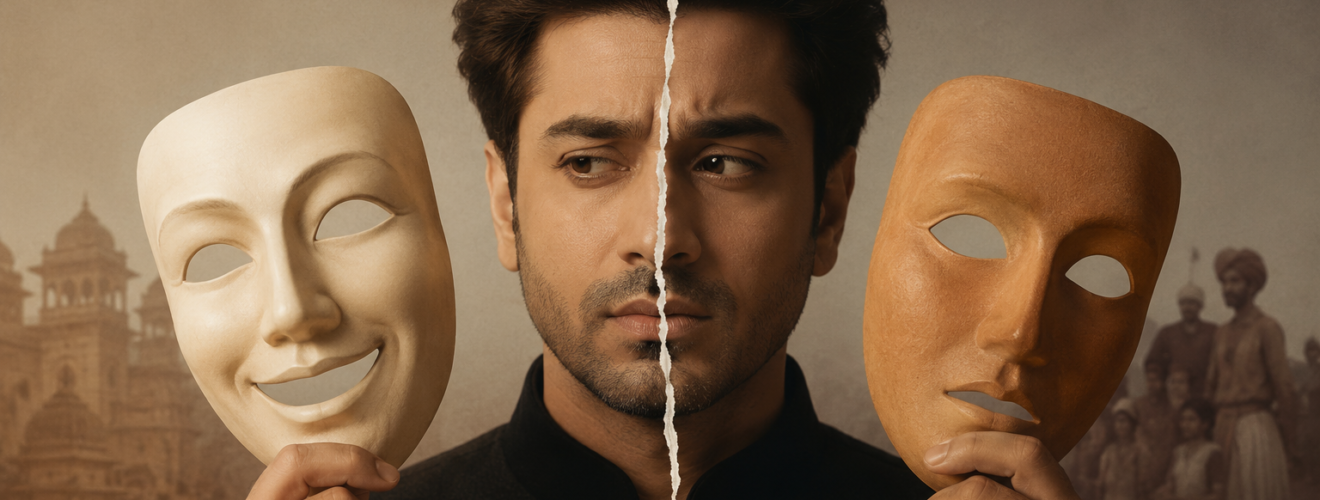
The mask slips.
And audiences feel the disconnect immediately.
Bollywood Must Respect Language Better
Bollywood has improved tremendously in many areas. Production quality looks world class. Writing has improved. Technical standards continue rising every year.
But language authenticity still remains neglected.
India’s diversity deserves deeper respect. Actors should spend far more time understanding how communities naturally speak. Filmmakers should stop treating accents as optional decoration.
Culture does not survive through costumes alone.
Language carries memory.
Accent carries identity.
Speech carries history.
Ignoring these things weakens storytelling itself.
Final Thoughts
Bollywood loves celebrating India’s diversity, but too often it only celebrates what can be seen. The deeper truth of culture often lives inside language, and language cannot be treated like temporary costume design.
Films like Sultan and Rocky Aur Rani Kii Prem Kahaani reveal the same problem repeatedly. The actors may look convincing, wear the correct clothing, and stand inside beautifully designed cultural worlds.
But when the voice sounds false, the performance begins collapsing.
Accent is not a technical detail.
It is identity itself.
When Bollywood keeps ignoring authentic regional speech, it slowly turns India’s rich diversity into a simplified version designed for mass comfort.
And that feels tragic.
Because culture without language is like a river without water.
The shape remains visible.
But the life inside disappears.
Also Read – Why Traditional Circus Culture Has Reached Its Final Era