Kurkure vs Lays: Full ₹20 Snack Comparison on Taste & Nutrition
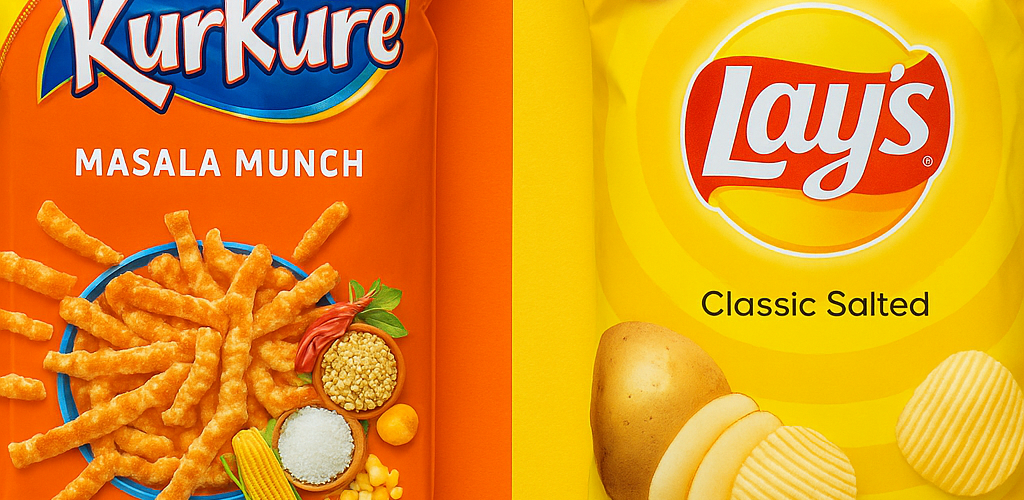
Kurkure Masala Munch and Lays Classic Salted sit on the same retail racks, capture attention with bold colours, and cost the same ₹20 for a small pack. Both belong to PepsiCo’s snack portfolio, and both dominate the Indian salty snack market. Yet both products offer a completely different snacking experience because the ingredient base, flavour profile, and nutrition values show sharp contrasts.
This comparison explores everything that shapes the final product — ingredients, processing style, nutrition, flavour strength, texture, aroma, satiety, health impact, affordability, and overall value.
1. Ingredients — What Goes Inside the Pack
Kurkure Masala Munch Ingredients
Kurkure uses a grain-based composition. The pack lists:
- Cereal products (64%)
- Rice meal 43.5%
- Corn meal 20%
- Edible vegetable oil (palmolein)
- Seasoning (spices, condiments, iodised salt, sugar, natural and nature-identical flavouring substances)
- Black salt
- Tomato powder
- Acidity regulators (330, 296, 334)
- Colour 160c
- Maltodextrin
- Gram meal (3%)
- Flavouring agents containing onion and garlic
This list shows a complex formulation with flavour enhancers, colour, acidity regulators, and spice blends. Kurkure builds its identity around high spice content, and the ingredient list strongly reflects that.
Lays Classic Salted Ingredients
Lays keeps the list extremely simple:
- Potato
- Edible vegetable oil (palmolein)
- Iodised salt
That’s all.
This structure reflects the product philosophy — minimal ingredients and a single dominant flavour. Lays relies on the natural taste of potato plus a mild salt sprinkle.
2. Nutrition Comparison — Per 100g
Nutrition tables from both packs show clear differences.
| Nutrient (per 100 g) | Kurkure | Lays |
|---|---|---|
| Energy | 556 kcal | 553 kcal |
| Protein | 6.4 g | 6.7 g |
| Carbohydrates | 56.8 g | 52.6 g |
| Total Sugars | 1.7 g | 0.6 g |
| Added Sugars | 0.8 g | 0 g |
| Total Fat | 33.7 g | 35.1 g |
| Saturated Fat | 15.2 g | 15.8 g |
| Trans Fat | 0.1 g | 0.1 g |
| Sodium | 694 mg | 510 mg |
Interpretation
Calories
Kurkure and Lays deliver almost identical calories per 100g. Both count as high-calorie snacks because frying forms the base of the cooking process.
Protein
Lays gives slightly more protein due to its direct potato base. Kurkure still offers reasonable protein because rice meal, corn meal, and gram meal contribute to the protein value.
Carbohydrates
Kurkure carries more carbs because grain-based extruded snacks naturally pack higher carb loads. Lays holds fewer carbs because potatoes hold more moisture before frying.
Fats
Lays contains a bit more total fat. Both products rely on palmolein oil, and both use deep frying.
Saturated Fat
Both stand almost equal and fall in the same range.
Sugar
Kurkure adds sugar for flavour and balancing acidic seasonings. Lays adds no sugar at all.
Sodium
Kurkure adds heavy seasoning so sodium shoots higher. Lays uses only salt and holds a significantly lower sodium value.
3. Texture, Taste, and Flavour Experience
Kurkure Masala Munch
Kurkure never takes the subtle route. Every stick crackles loudly with each bite because the extruded structure forms multiple tiny air pockets. The seasoning coats the surface and enters the cracks, so every bite carries strong masala impact.
The flavour profile always leans toward:
- spice
- tang
- savoury notes
- onion and garlic aroma
- a mild sweetness
- distinct chilli heat
Every Kurkure piece leaves a lingering masala aftertaste because dried spice powders cling tightly to the surface.
Lays Classic Salted
Lays expresses gentleness. A single thin potato slice folds delicate crispiness with mild salt. The flavour remains simple and predictable. The bite feels light and airy compared to Kurkure’s rigid crunch.
The flavour stays clean:
- natural potato
- very light salt
- neutral oil aroma
A mild taste makes Lays a universal snack that pairs easily with sandwiches, tea, dips, and cold drinks.
4. Aroma and Sensory Appeal
Kurkure
Open a Kurkure pack and an instant wave of masala aroma hits the senses. Strong notes of garlic, tomato, chilli, and mixed spices dominate. The aroma always signals high seasoning intensity.
Lays
Opening a Lays pack gives a soft potato-oil fragrance. The aroma stays subtle and never hits sharply. It carries comfort because the smell matches home-cooked potato chips in spirit.
5. Processing Style — Extruded vs Sliced
This difference shapes everything.
Kurkure Processing
Kurkure uses a grain-based dough created from rice meal, gram meal, corn meal, and seasonings. Machines push this dough through extrusion equipment. High pressure shapes the dough into rough sticks. Frying follows immediately. Seasoning comes at the final step.
Extrusion generates its signature:
- rigid shape
- hollow interior
- crackling crunch
Lays Processing
Lays slices whole potatoes into thin pieces. These slices go into hot oil and get fried until crisp. After this, workers or machines sprinkle salt.
This process keeps Lays closer to natural potatoes.
6. Health Impact — Which One Scores Better?
Neither product counts as a health snack. Both fry in palmolein oil and carry high fat. But differences still exist.
Salt and Sodium
Kurkure: very high sodium (694 mg per 100g)
Lays: lower sodium (510 mg per 100g)
A person who watches salt intake finds Lays a safer option.
Additives
Kurkure uses acidity regulators, flavouring agents, colour, and maltodextrin.
Lays uses no additives except oil and salt.
The simple ingredient list gives Lays a cleaner label.
Sugar
Kurkure includes added sugar.
Lays avoids sugar completely.
Spices
Kurkure delivers stronger spices which may irritate sensitive stomachs.
Lays stays gentle and safe for most people.
Portion Control
Kurkure creates a stronger flavour addiction feeling because the masala build-up triggers craving. Lays feels lighter so portion control becomes easier.
Overall, Lays looks slightly safer for frequent consumption, but both need moderation.
7. Satiety and Eating Experience
Kurkure
Kurkure offers stronger crunch and flavour frustration relief. People feel more satisfied after fewer sticks because spice intensity delivers faster sensory overload. The masala sticks adhere to the fingers, so eating feels messier and sensory-rich.
Lays
Lays feels lighter and easier to binge. The flavour comfort creates a smooth flow, and the mildness causes slower satiety. Many people finish a full small pack without realising it.
8. Price Analysis — Both at ₹20
Both packs cost ₹20. Yet both deliver different value for the same price.
Kurkure Value
- high flavour impact
- stronger aroma
- more complex seasoning
- bolder experience
Lays Value
- clean ingredients
- simpler taste
- premium potato crisp feeling
- more familiar texture
The price stays identical but the experience targets different consumer moods.
9. Target Audience and Behaviour
Kurkure Audience
The Kurkure audience likes:
- intense spices
- masala cravings
- strong crunch
- desi snack profiles
Kurkure appeals strongly to teenagers and young adults who want bold, dramatic flavours.
Lays Audience
The Lays audience prefers:
- mild flavours
- light eating
- classic snacking
- simple ingredients
Lays reaches a wider demographic because the mildness suits everyone.
10. Portion Size and Pack Satisfaction
Both packs list 20g serving sizes. Consumers usually finish the entire pack at once because mechanical serving control rarely applies to salty snacks.
Kurkure
20g of Kurkure feels enough for a one-time craving satisfaction because strong seasoning saturates the palate quickly.
Lays
20g of Lays feels smaller because lighter crisps create a feeling of incompleteness. Many people prefer medium or large packs for better satisfaction.
11. Colour and Presentation
Kurkure
The orange pack highlights spice and excitement. The extruded sticks look rugged and irregular, which matches the brand identity of bold Indian-style snacking.
Lays
The yellow pack communicates simplicity and brightness. The potato slice graphics show neatness and uniformity, signalling a clean and premium product.
12. Mouthfeel and Aftertaste
Kurkure
Mouthfeel stays grainy, crunchy, and firm. Aftertaste includes masala traces plus mild sweetness. The sticking seasoning creates lingering flavours.
Lays
Mouthfeel stays light, airy, thin, and crisp. Aftertaste gives mild salt and neutral oil. It fades quickly, so no strong lingering sensation remains.
13. Which One Feels Fresher?
Kurkure
Spice powders mask small changes in freshness. So even slightly older Kurkure often tastes uniform. Masala hides minor staleness.
Lays
Lays depends on oil stability. Any slight staleness appears instantly because the flavour profile stays delicate. That means freshness plays a huge role in the final taste.
14. Final Comparison Summary
If the focus stays on flavour:
Kurkure dominates completely.
If the focus stays on clean ingredients:
Lays wins without debate.
If someone wants lower salt:
Lays stands safer.
If someone wants intense snacking:
Kurkure offers stronger reward value.
If someone wants simple snacking:
Lays feels more comforting.
If someone worries about additives:
Lays holds the advantage again.
If price matters:
Both cost ₹20, so the decision depends entirely on mood and preference.
15. Final Verdict — Kurkure or Lays?
Kurkure and Lays never compete directly even though both cost ₹20. Each brand fills a completely different need.
- Kurkure suits moments of bold spice cravings and high crunch intensity.
- Lays suits moments of comfort snacking, mild flavour, and simple ingredients.
Kurkure brings entertainment through masala.
Lays brings comfort through simplicity.
Both snacks carry high fat, high calories, and fried composition, so moderation becomes important. But both deliver value for the ₹20 price point in their own way.
Kurkure stands for Indian masala identity.
Lays stands for global potato chip identity.
Both succeed because both stay true to their flavour personality.
Also Read – Kacchi Haldi ki Sabzi: Reviewing the Hidden Gem Recipe of Rajasthan