
VR and AR in Tourism: Uses, Benefits and Challenges
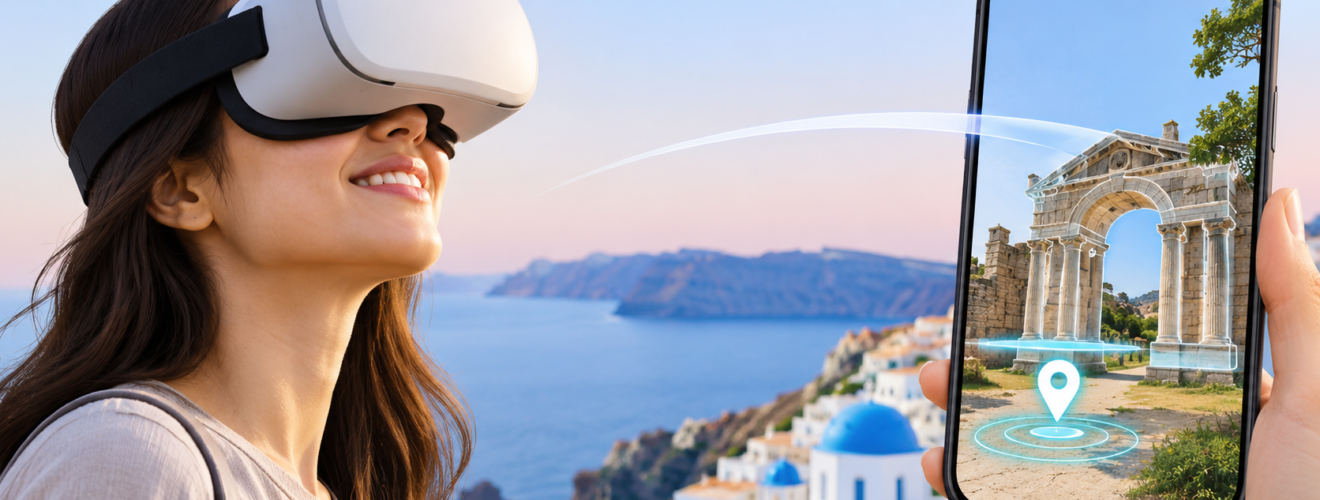
The tourism industry has changed a lot over the last few decades. The growth of digital technology has changed how people select destinations, plan holidays, explore new places, and share their travel experiences. Among the latest digital tools, Virtual Reality (VR) and Augmented Reality (AR) have gained great attention. These technologies offer new ways to explore tourist destinations without the need for a physical visit. They also help tourists learn more about places through digital information and interactive experiences.
Virtual Reality creates a computer-based environment that allows users to experience a place through a headset or other digital device. In contrast, Augmented Reality adds digital information, images, sounds, and other features to the real world through smartphones, tablets, or special glasses. Both technologies have useful roles in modern tourism. They help hotels, travel companies, museums, tourist attractions, and destination managers offer better services to visitors.
The use of VR and AR in tourism has also become an important research area. Researchers now study their effects on tourist choices, customer satisfaction, destination image, cultural heritage, and environmental protection. This article explores the major applications, benefits, challenges, research trends, and future scope of these technologies in the tourism industry.
Understanding Virtual Reality and Augmented Reality
Virtual Reality is a technology that creates a fully digital environment. A person can enter this environment through a VR headset and explore a place in a virtual form. For example, a tourist who plans to visit Paris can take a virtual tour of the Eiffel Tower before the actual trip. Similarly, a person can explore a beach resort, hotel room, museum, or mountain area from home.
VR offers a sense of presence because users feel as if they are part of the virtual place. It can also provide a 360-degree view of a destination. This helps tourists gain a better idea of the place before they make travel decisions.
Augmented Reality works in a different way. It does not replace the real world. Instead, it adds digital details to the real environment. For example, a tourist who visits an old monument can point a smartphone camera towards the structure and view its original design on the screen. AR can also show historical facts, maps, translations, and directions.
Although VR and AR have different functions, both can make tourist experiences more informative, attractive, and interactive.
Major Applications of VR and AR in Tourism
Virtual Tours and Destination Promotion
One of the most common uses of VR in tourism is virtual destination tours. Travel companies and tourism boards can create digital tours of popular destinations. These tours allow potential visitors to explore beaches, hotels, historical sites, natural parks, and famous landmarks before they book a trip.
For example, a tourist can view a hotel room, explore its facilities, and see the nearby attractions through a VR experience. This can help customers make better choices and reduce uncertainty before a purchase.
Virtual tours also help destinations reach people who may not have the time, money, or physical ability to travel. They offer a chance to explore distant places from home.
Cultural Heritage and Museum Tourism
VR and AR have useful roles in cultural heritage tourism. Many historical buildings, monuments, and ancient sites have suffered damage due to age, natural disasters, and human activities. VR can help create digital versions of such places and allow people to explore their past appearance.
AR can also add digital details to real historical sites. Visitors can use their smartphones to view old structures, historical events, and cultural stories. Museums can use these tools to explain the history of objects in a simple and attractive way.
Such applications can improve public knowledge of history and support the protection of cultural heritage. They can also help younger visitors develop more interest in historical places.
Hotel and Resort Services
Hotels and resorts can use VR to offer virtual tours of their rooms, restaurants, swimming pools, and other facilities. Customers can view these spaces before they make a reservation. This can help them select a suitable place and develop greater trust in the hotel.
AR can also support hotel guests through digital maps, room information, and local travel details. These services can make a hotel visit more convenient and comfortable.
Tourist Navigation and Local Information
AR can help tourists find their way in unfamiliar cities and tourist areas. A smartphone can display digital directions over a live camera view. Tourists can also access information about nearby restaurants, monuments, shops, and public transport.
This feature is useful for international visitors who may not know the local language or road system. AR-based guides can also provide details about local history, architecture, and culture.
Adventure and Nature Tourism
VR can offer virtual experiences of activities such as mountain climbing, scuba diving, skiing, and wildlife safaris. Such experiences can help people understand the nature of an activity before they take part in it.
In nature tourism, VR can also offer access to remote areas that may be difficult or unsafe to visit. AR can provide details about plants, animals, and natural features at tourist sites. These tools may also help visitors develop greater awareness of nature and wildlife protection.
Recent Research Trends and Important Data
Research on VR and AR in tourism has grown over the last decade. A systematic review of tourism destination research identified 95 peer-reviewed articles published between 2015 and 2024. Another review of VR and AR in hospitality research covered 110 publications from 2000 to 2024.
A 2026 bibliometric study identified 232 studies related to VR and AR adoption. A separate review of museum research identified 208 publications on VR, AR, and related technologies. These figures show the wide range of academic interest in immersive digital experiences.
Research has also examined the use of AR in eco-smart tourism. A 2026 study from Malaysia used 367 valid survey responses to study this subject. Another 2026 empirical study examined virtual tourism behaviour through a sample of 476 tourists.
These figures come from separate research projects. They do not represent the total number of VR or AR users across the world. However, they show that researchers now study these technologies from several points of view, such as customer behaviour, heritage protection, tourism services, and sustainability.
Recent research also places greater focus on the link between virtual experiences and real travel choices. Researchers want to know whether a person who enjoys a virtual tour will later visit the actual destination. Other areas of interest include customer trust, personal experience, destination image, and tourist satisfaction.
Benefits of VR and AR in the Tourism Industry
One major benefit of VR and AR is better access to tourist information. People can explore destinations and understand their features before they make a travel decision. This can reduce confusion and help them select places that match their needs and budgets.
These technologies can also improve customer satisfaction. A virtual tour offers a clear view of a hotel or tourist attraction, while AR can provide useful details at the actual site. Such features can make a visit more enjoyable and informative.
Another major benefit is better access for people with physical disabilities, older adults, and those who cannot travel due to health or financial limits. Virtual tours can offer them a chance to explore places that may be difficult to reach in person.
VR and AR can also support local businesses. Hotels, travel agencies, museums, and tourist attractions can use digital experiences to reach more customers and promote their services. These tools may help smaller destinations attract attention from people across the world.
Challenges and Limitations
Despite their benefits, VR and AR face several challenges in tourism. The first major issue is cost. The development of high-quality virtual tours, digital models, and AR applications can require a large budget. Small hotels, museums, and local tourism businesses may not have enough funds to adopt these tools.
Another challenge is access to suitable devices and internet services. Some users may not have a VR headset or a modern smartphone. Poor internet access can also affect the quality of virtual experiences, especially in rural and remote areas.
There are also concerns about privacy and data security. AR applications may collect location details, camera access, and other personal information. Companies must protect this data and use it in a responsible way.
A further concern is the loss of real travel experiences. A virtual visit cannot fully replace the feelings, sounds, smells, and personal contact that people experience at an actual destination. There is also a risk that digital versions of historical places may not show their true cultural value.
Another major challenge is the environmental cost of digital equipment. The production, use, and disposal of electronic devices require energy and natural resources. Therefore, the environmental value of VR and AR should be assessed with care.
VR, AR, and Sustainable Tourism
Sustainable tourism aims to reduce harm to the environment while also supporting local communities and economies. VR and AR may help achieve some of these goals.
For example, virtual tours can provide access to fragile natural areas without the need for every visitor to travel there. This may help reduce pressure on sensitive ecosystems. AR can also educate tourists about local wildlife, natural resources, and cultural heritage.
Museums and heritage sites can use digital tools to explain why certain places need protection. Tourists may develop greater respect for local culture and the environment after they learn about the history and value of a destination.
However, these technologies are not a complete solution to the problems of mass tourism. Their actual environmental effects depend on device production, energy use, travel habits, and visitor behaviour. More research is needed to understand their long-term role in sustainable tourism.
Future Prospects of VR and AR in Tourism
The future of VR and AR in tourism looks promising. Better headsets, smartphones, internet services, and digital tools may make these experiences more affordable and easy to access.
Artificial Intelligence may also improve VR and AR services. AI-based systems can suggest destinations based on personal interests, travel budgets, and past choices. They may also offer virtual guides that respond to tourist questions and provide information in different languages.
Another possible development is the use of digital twins. A digital twin is a virtual copy of a real place, such as a hotel, city, or tourist attraction. Tourism managers may use these models to study visitor flow, test new services, and improve destination management.
Future research should also examine whether virtual experiences lead to actual visits, repeat visits, and customer loyalty. More studies are needed on older tourists, people with disabilities, rural destinations, and countries with limited access to digital tools.
Conclusion
Virtual Reality and Augmented Reality have opened new opportunities for the tourism industry. VR allows people to explore digital versions of destinations, while AR adds useful information to real places. Both technologies have valuable applications in destination promotion, hotel services, museums, cultural heritage, adventure tourism, and tourist navigation.
Research from recent years shows a rise in academic interest in these tools. However, several challenges remain, such as high costs, device access, privacy concerns, digital accuracy, and environmental effects.
VR and AR should support real travel rather than replace its human and cultural value. With responsible use, better access, and further research, these technologies can help create more informed, accessible, and sustainable tourist experiences. Their future role will depend on how well the tourism industry balances digital innovation with the needs of people, local communities, and the environment.
Also Read – Best Tech Trends to Watch as 2026 Enters Its Final Quarter