
Smartwatches for Health Tracking: Review and Comparison
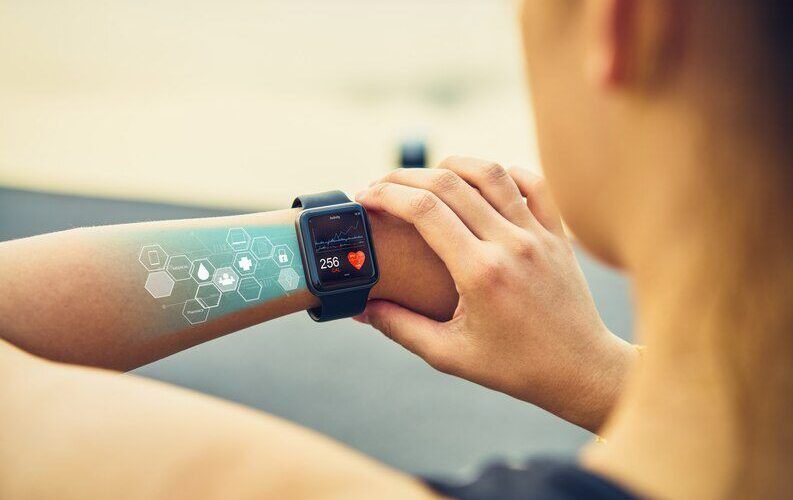
Smartwatches have rapidly evolved from simple notification devices into sophisticated platforms for continuous physiologic monitoring. This research-style review synthesizes the technology, measurement capabilities, validation challenges, clinical applications, privacy considerations, and usability trade-offs of contemporary smartwatches used for health tracking. We propose a structured framework for evaluating devices, compare device classes by functionality and evidence, and offer practical recommendations for clinicians, researchers, and consumers seeking to choose or study wearable health platforms. Limitations of current evidence and future research priorities are discussed.
Introduction
Wearable devices—especially smartwatches—are now widely available consumer products that routinely collect data relevant to health: heart rate, activity, sleep, respiratory rate proxies, and in some devices electrocardiograms or blood oxygen saturation. Their ubiquity, continuous monitoring, and connectivity position them to support preventive health, early detection of disease, remote monitoring, and clinical research. Yet these opportunities are tempered by variability in sensor quality, algorithm transparency, clinical validation, battery life, ease-of-use, and data governance. A careful, structured comparison is necessary to translate smartwatch data into meaningful, safe, and equitable health insights.
Methods and Evaluation Framework
This review uses a conceptual framework to evaluate smartwatches for health tracking across eight domains:
- Sensors & Measurements: types of physiological sensors (PPG, accelerometer, gyroscope, ECG electrodes, SpO₂), sampling rates, and derivative metrics (HRV, sleep staging, energy expenditure).
- Measurement Validity: accuracy vs clinical gold standards, robustness across conditions (movement, skin tone, perfusion).
- Algorithms & Transparency: whether signal processing and event detection algorithms are documented and adjustable.
- Clinical Evidence: peer-reviewed validation, regulatory approvals, and published clinical outcome data.
- Usability & Form Factor: comfort, battery life, display and interaction design, and form factor suitability for continuous wear.
- Interoperability & Data Access: APIs, export formats, and compatibility with clinical systems.
- Privacy & Security: local vs cloud storage, encryption, consent mechanisms, and governance.
- Cost & Support: device price, subscription models, and manufacturer support for updates and recalls.
Using these domains provides a repeatable, transparent way to compare devices or classes of devices without privileging any single brand.
Sensor Technologies and Derived Metrics
Photoplethysmography (PPG)
PPG remains the most common sensor for heart rate (HR) and heart rate variability (HRV) estimates. It measures volumetric blood changes using optical techniques. Advantages include low power usage and continuous sampling. Limitations include motion artifacts, sensitivity to skin pigmentation and ambient light, and variable performance during high-intensity activity.
Inertial Measurement Units (IMUs)
Accelerometers and gyroscopes provide motion, posture, and step-count information. IMUs enable activity classification (walking, running), fall detection, and sleep–wake estimation. Accuracy depends on sensor orientation, sampling rates, and algorithmic thresholds.
Electrocardiogram (ECG)
Some smartwatches include single- or multi-lead ECG capabilities, typically for atrial fibrillation screening. ECG provides higher specificity for arrhythmia detection than PPG-derived measures but may require specific user actions and has limited continuous monitoring windows.
Pulse Oximetry (SpO₂) and Respiratory Proxies
Optical sensors estimate peripheral oxygen saturation. While useful for trend monitoring, spot SpO₂ readings from wrist sensors are typically less reliable than finger or ear sensors. Respiratory rate can be estimated using PPG-derived variability, accelerometer data, or dedicated respiration sensors; however, accuracy varies.
Temperature and Other Sensors
Skin temperature sensors and barometric pressure sensors can provide contextual health data (fever detection, altitude-aware energy expenditure). None replace clinical thermometers but can flag trends.
Validity, Biases, and Real-World Performance
Validation against clinical gold standards (ECG for HR; polysomnography for sleep; spirometry for respiratory metrics) is critical. Key issues:
- Motion artifacts: PPG accuracy degrades with vigorous motion; algorithmic filtering partially mitigates but may reduce responsiveness.
- Skin tone and perfusion: Optical sensors historically underperform in deeper skin pigmentation and low-perfusion states, raising equity concerns.
- Environmental conditions: Ambient light, temperature, and sweat affect sensor readings.
- Population representativeness: Many validation studies use small, convenience samples (young, healthy adults) limiting generalizability to older adults, children, or people with chronic conditions.
- Algorithmic opacity: Proprietary signal-processing and classification methods make independent validation and replication difficult.
Consequently, device outputs should be interpreted as probabilistic and contextual rather than definitive clinical diagnoses unless explicitly validated and regulated for a particular indication.
Clinical Applications and Evidence
Smartwatches have promising applications at multiple points in care:
- Arrhythmia Screening: Devices with ECG or PPG-based AF detection can facilitate opportunistic screening. Evidence supports feasibility, but false positives occur, and confirmatory testing is required.
- Chronic Disease Monitoring: Trends in activity, HR, and sleep may support management of heart failure, diabetes, and COPD when integrated into care pathways. Evidence of improved outcomes is limited and context-dependent.
- Postoperative and Remote Monitoring: Continuous data streams can detect deterioration, but workflow integration and alert fatigue are barriers.
- Behavior Change and Prevention: Activity prompts and feedback can increase steps and short-term physical activity; long-term adherence and clinical benefit evidence is mixed.
- Research Uses: Large-scale observational data from consumer wearables provide epidemiologic insights but require careful treatment of measurement error and selection bias.
Regulatory approvals (e.g., for AF detection or ECG interpretation) strengthen clinical utility for specific tasks but do not extend to all measured metrics.
Privacy, Security, and Ethical Considerations
Smartwatch-derived health data are sensitive. Important considerations:
- Data ownership and consent: Users must understand what is collected, how it is used, and with whom it is shared. Broad or opaque consent undermines autonomy.
- Cloud storage and transmission: Many devices transmit data to vendor clouds; encryption in transit and at rest is essential. Local storage options and minimal data retention policies improve privacy.
- Third-party sharing and monetization: Data shared with partners or used for advertising poses risks. De-identification is imperfect, and reidentification is possible.
- Equity and Access: Cost and smartphone dependency can exclude underserved populations; sensor biases may widen disparities in care if unaddressed.
- Clinical responsibility: When devices produce alerts, responsibilities for response must be defined—especially in remote monitoring programs—to avoid liability and ensure patient safety.
Ethical deployment requires transparency, user control, and alignment with clinical governance frameworks.
Usability, Battery Life, and Form Factor
Usability determines real-world adherence. Key trade-offs:
- Continuous monitoring vs battery life: High-frequency data (ECG streaming, high-sample PPG) drains battery; manufacturers balance sampling schemes and low-power modes.
- Comfort and wearability: Size, strap materials, and skin irritation influence continuous use, especially during sleep.
- User interface: Clear, actionable feedback supports behavior change; complex dashboards may overwhelm users.
- Maintenance: Charging frequency, water resistance, and software updates affect long-term use.
Devices optimized for 24/7 wear (lightweight, multi-day battery, breathable straps) tend to produce higher-quality longitudinal datasets.
Interoperability and Data Access
For clinical and research use, access to raw or granular data is often necessary. Barriers include:
- Proprietary formats: Vendors may limit data exports to summaries, impeding independent analysis.
- APIs and Standards: Open APIs and support for standards (e.g., common health data formats) facilitate integration with electronic health records (EHRs) and research platforms.
- Regulatory and contractual limits: Terms of service may restrict data use for research or commercial applications.
Promoting device-agnostic platforms and adherence to interoperable standards improves translational potential.
Comparative Evaluation: Device Classes and Use Cases
Rather than ranking individual models (which change rapidly), devices can be grouped:
- Basic fitness-trackers: Low-cost, long battery life, accurate for step counts and coarse activity detection. Suitable for population-level surveillance and basic lifestyle interventions. Not recommended for clinical decision-making beyond activity trends.
- Multisensor smartwatches: Combine PPG, IMU, and occasional ECG capability; provide HR, HRV, sleep staging, SpO₂ proxies, and richer activity classification. Appropriate for consumer health, longitudinal monitoring, and screening when used with clinical oversight. Validation varies by metric.
- Clinical-grade wearables: Designed for medical monitoring with stringent validation, regulatory clearances, and opportunities for integration with clinical workflows. Typically more expensive, with clear labeling of intended uses (e.g., ECG for AF detection). Best suited when diagnostic reliability is necessary.
Selection depends on the intended use: consumer wellness, research-grade data collection, or clinical monitoring requiring regulatory-grade accuracy.
Discussion and Recommendations
For Clinicians and Health Systems
- Match device class to clinical goal: Use clinical-grade devices for diagnosis; multisensor smartwatches for longitudinal trend detection with confirmatory testing; basic trackers for lifestyle interventions.
- Verify validation evidence: Prefer devices with peer-reviewed validation against clinical standards and with diverse population testing.
- Define workflows: Establish who reviews device-generated alerts, how clinicians will be notified, and how data will be integrated into the medical record.
For Researchers
- Seek raw data access: Plan studies with devices that provide raw sensor data or high-fidelity exports to allow independent processing.
- Account for measurement error: Design statistical methods and sample sizes that account for device noise and missingness.
- Diverse sampling: Recruit across age, skin tones, activity levels, and clinical conditions to improve generalizability.
For Consumers
- Set realistic expectations: Smartwatches can support healthy behaviors and detect signals but are not substitutes for professional medical evaluation.
- Privacy awareness: Review data sharing options and vendor policies; prefer devices that allow local control and limited cloud sharing where possible.
- Usability priorities: Choose devices that fit lifestyle (battery life, comfort) to ensure continuous wear and better longitudinal insights.
Limitations of Current Evidence
The literature is limited by vendor heterogeneity, publication bias, small and convenience samples, and proprietary algorithms. Rapid device turnover creates a moving target for validation. Additionally, many studies focus on short-term accuracy rather than long-term clinical outcomes such as reduced morbidity or improved disease control.
Future Directions
Priority areas include: standardized validation protocols across skin tones and activity levels; open algorithms or transparent reporting of processing pipelines; interoperable data standards to integrate wearables into EHRs; long-term randomized studies assessing clinical outcomes; and governance frameworks to protect privacy while enabling research.
Conclusion
Smartwatches offer unprecedented access to continuous physiologic data with applications across prevention, monitoring, and research. Their utility hinges on matching device capabilities to clinical questions, rigorous validation, transparent algorithms, and ethically informed data governance. When chosen and deployed thoughtfully—supported by clinical pathways and appropriate safeguards—smartwatches can enhance health insights and patient engagement; however, one must remain cautious about overinterpreting consumer-grade metrics and vigilant about equity and privacy implications.
Practical Checklist for Selecting a Smartwatch for Health Tracking
- Define primary use-case (wellness, research, clinical monitoring).
- Confirm sensor suite aligns with intended metrics (ECG, PPG, SpO₂, IMU).
- Review evidence of validation against gold standards and in diverse populations.
- Verify data export options and API access.
- Evaluate battery life and wearability for continuous use.
- Inspect privacy policies and data-sharing settings.
- Consider total cost (device price + subscriptions).
- Plan clinical workflows and responsibilities for monitoring and alerts.
This review provides a structured, pragmatic approach for assessing smartwatches in health contexts and highlights the need for transparent validation, interoperable data practices, and responsible deployment to realize the full potential of wrist-worn health technology.
ALSO READ: Is It Time to Retire Your “One SIP Fits All” Strategy?